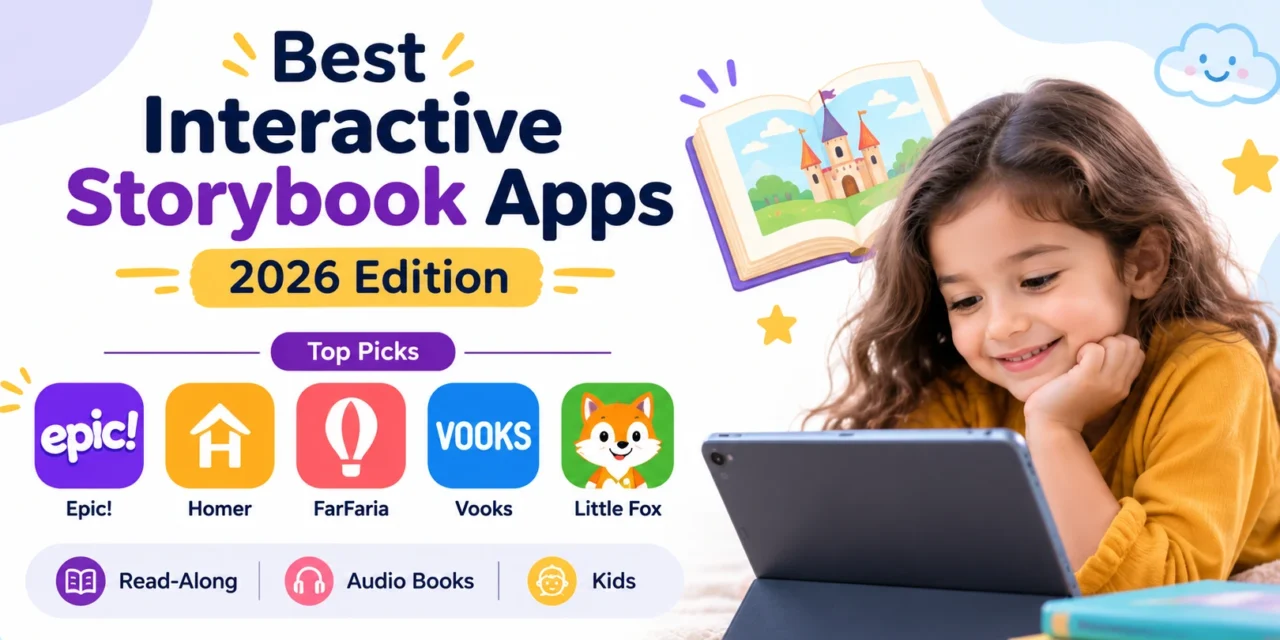
Read-along storybook apps bridge the gap between being read to and reading independently, highlighting each word as it’s narrated aloud so kids can follow along and gradually build word recognition without the frustration of sounding out every unfamiliar word alone. The best apps in this category use genuinely warm, well-paced narration and interactive touches that keep kids engaged without turning the story into a distracting game. Consistent exposure to this kind of guided reading has been shown to genuinely support vocabulary growth well beyond what passive listening alone provides. Here are five interactive storybook apps in 2026 that genuinely support early reading development while staying fun.
Epic!

Epic! offers a genuinely massive library of books with read-along narration for a huge portion of its catalog, making it easy for kids to explore stories across a wide range of genres and reading levels within one app.
Homer
Homer builds read-along stories into a broader, personalized early literacy curriculum, adapting content based on a child’s specific age and skill level rather than offering a static, one-size-fits-all library.
Farfaria
Farfaria offers genuinely charming, illustrated read-along stories with a rotating library that refreshes regularly, keeping content feeling fresh rather than kids cycling through the same fixed set of books repeatedly.
Vooks

Vooks turns picture books into gently animated read-along videos, adding subtle movement and sound to classic and original stories without overwhelming the core reading experience with excessive interactivity.
Little Fox
Little Fox combines read-along stories with simple animated storytelling, offering a genuinely engaging middle ground between a static picture book and a full animated show for kids building early reading habits.
Getting the Most Educational Value from Read-Along Apps
Read-along apps work best when paired with active engagement rather than passive listening, pausing occasionally to ask a child what they think happens next, or pointing out a word they’ve seen before, turns a passive listening session into genuine active reading practice. It’s worth alternating between read-along mode and having a child attempt to read simpler, familiar passages independently once they’ve heard a story enough times, since that gradual handoff from supported to independent reading is exactly where real skill development happens. Choosing books slightly above a child’s current independent reading level for read-along sessions specifically, while keeping independent reading material a bit easier, tends to build vocabulary and comprehension more effectively than always matching difficulty exactly to their current skill level.
Read-along apps offer a genuinely valuable middle step between being read to and reading solo, building the word recognition and confidence kids need to eventually tackle books entirely on their own. Start with Epic! for its sheer library breadth, and consider Homer specifically if you want a more structured, personalized curriculum guiding your child’s reading development over time. Whichever you choose, try to sit with your child for at least a few sessions rather than leaving them entirely alone with the app, your reactions to the story genuinely add to the experience in ways the narration alone can’t replicate. Asking simple questions about the story afterward, like what their favorite part was, also reinforces comprehension far more than passive listening alone ever manages. That small conversation habit, repeated consistently, tends to build genuine comprehension skills that pay off well beyond early reading years. It costs nothing extra and takes only a minute or two, yet it’s one of the most consistently recommended habits among early literacy specialists.