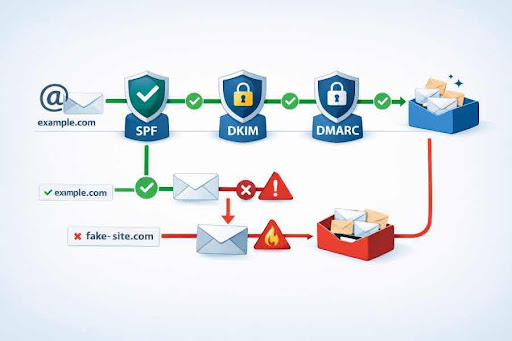
Email deliverability is not solely reliant on sending high-quality content at opportune moments; it also hinges on unseen technical evaluations carried out by mailbox providers prior to your message arriving in the inbox. A key yet often misinterpreted aspect of these evaluations is DMARC alignment. Even if SPF and DKIM settings are properly configured, inadequate alignment can lead to emails failing authentication, being marked as dubious, or landing in spam folders.
Grasping the mechanics of DMARC alignment is crucial for anyone dedicated to safeguarding their domain, thwarting spoofing attempts, and ensuring their emails land in the inbox. Essentially, DMARC alignment is a fundamental behind-the-scenes protocol that verifies whether the sending domain of your email corresponds with its authentication records. When alignment is successful, emails are considered trustworthy and reach the inbox; when it fails, they face a higher risk of being filtered out or rejected.
Why DMARC Alignment Matters More Than You Think
DMARC (Domain-based Message Authentication, Reporting, and Conformance) serves as a regulatory framework that integrates SPF and DKIM. It relies on alignment to determine the validity of these authentication methods. This alignment is essential for ensuring that your emails are recognized as trustworthy by recipient servers, which ultimately affects whether they land in the inbox or are rejected. Even legitimate emails can fail to pass authentication and impact delivery if SPF and DKIM are not correctly aligned with your domain.
In essence, DMARC goes beyond simply checking if SPF or DKIM succeeded; it verifies whether they succeeded for the domain that matches what the recipient sees in the From address. If there’s a discrepancy, your email could fail DMARC, despite SPF or DKIM passing technically.
What Is DMARC Alignment?
DMARC alignment evaluates if the domain used for email authentication is the same as the one seen by recipients. This mechanism safeguards users against phishing schemes that disguise harmful messages as trustworthy communications from recognized brands, even though they originate from a different domain.
The process of DMARC alignment involves confirming that the domain appearing in the email’s “From” field corresponds with the domains validated through SPF and DKIM mechanisms. This ensures that email providers can authenticate the sender’s identity and determine the appropriate action — whether to deliver, filter, or block the message.
The Role of the From Domain
The “From” domain appears in the email header and is what recipients notice when they view the email. DMARC considers this domain as the definitive reference. For DMARC to succeed, both SPF and DKIM must correspond with this domain — either directly or through an authorized connection.
Alignment vs Authentication
Authentication ensures that an email is both legitimate and unchanged. Alignment verifies that this legitimacy corresponds to the domain presented to the recipient. It’s possible for an email to pass authentication yet still not meet DMARC criteria due to alignment issues.
Understanding SPF Alignment
SPF, or Sender Policy Framework, verifies if the server sending an email has permission to act for a particular domain. To achieve DMARC alignment, it’s essential that SPF not only passes but also aligns with the domain in the “From” address.
Recognizing SPF alignment involves understanding how the domain shown in your email’s “From” field corresponds to the domain that is permitted in your SPF record. When these domains match properly, it aids email providers in confirming authenticity and enhances the likelihood of successful delivery by minimizing the chance of impersonation.
How SPF Alignment Works
SPF alignment assesses the relationship between two domains:
- The domain in the From field
- The domain specified in the Return-Path (MAIL FROM)
When these domains are identical or deemed related under lenient criteria, SPF is considered aligned.
Strict vs Relaxed SPF Alignment
DMARC offers two modes for alignment:
- Strict (s): The domain in the From header must be an exact match with the Return-Path domain.
- Relaxed (r): Subdomains are permitted — for instance, mail.example.com can align with example.com.
The default and most widely adopted setting is relaxed alignment, as it accommodates typical configurations from email service providers.

Understanding DKIM Alignment
DKIM (DomainKeys Identified Mail) employs cryptographic signatures to ensure that an email remains unchanged during transmission. DKIM alignment assesses if the domain in the DKIM signature corresponds with the domain shown in the “From” address. This alignment indicates that the domain in the DKIM signature should align with the displayed “From” domain to successfully meet authentication requirements. When alignment is correctly achieved, it aids email service providers in confirming the legitimacy of messages, thereby enhancing their chances of reaching the inbox.
How DKIM Alignment Works
DKIM alignment assesses:
- The domain in the From field
- The domain specified by d= in the DKIM signature
When these domains either match or are deemed related through relaxed alignment, DKIM is considered aligned and contributes to DMARC compliance.
Why DKIM Alignment Is Often More Reliable
In contrast to SPF, DKIM alignment remains unaffected by email forwarding. Since the signature remains unchanged during transit, DKIM is often considered a more reliable method for achieving DMARC compliance, particularly for marketing and transactional emails.
Strict vs Relaxed Alignment in DMARC
DMARC allows domain owners to determine the level of alignment needed for their emails. Selecting the appropriate mode helps maintain a balance between security and the likelihood of successful delivery. Strict alignment enforces that the domain in the “From” line must match the domain used in SPF or DKIM checks perfectly, providing enhanced security against email spoofing.
On the other hand, relaxed alignment permits subdomain matches, simplifying setup while still ensuring effective email authentication and delivery.
Relaxed Alignment (Default)
A flexible alignment enables subdomains to connect with the main organizational domain. This approach is beneficial for the majority of businesses as it:
- Facilitates the integration of third-party senders
- Lowers the chances of unintentional DMARC failures
- Continues to prevent clear spoofing efforts
Strict Alignment (High Security)
For strict alignment to be achieved, domain matches must be precise. Although this enhances security, it also raises the likelihood that legitimate emails may not pass DMARC if the settings are not flawless. Financial institutions or organizations with highly regulated sending systems usually implement strict alignment.
How DMARC Decides Pass or Fail
The principles of DMARC are straightforward, yet strict:
If either SPF or DKIM is successful and aligns correctly, DMARC is considered a success.
Conversely, if both fail or do not align, DMARC will fail.
This implies that you only need one of the two methods, SPF or DKIM, to be aligned for a pass. However, depending solely on one could elevate risks if that particular method encounters issues.
Common DMARC Failure Scenarios
Common issues related to alignment often involve:
- Employing an external email service without ensuring proper domain alignment
- Incorrectly set up Return-Path domains
- DKIM signatures that do not match the From address domain
- Forwarded messages that disrupt SPF alignment
DMARC Alignment and Third-Party Senders
Contemporary companies increasingly depend on external tools for functions such as marketing, customer relationship management (CRM), and transactional email. In such scenarios, achieving DMARC alignment is crucial. This alignment guarantees that emails dispatched via third-party services are correctly authenticated with your domain, allowing them to pass SPF and DKIM validations.
If the alignment is incorrect, even genuine emails from these third-party providers may not meet DMARC criteria, resulting in their rejection or delivery to the spam folder.
Aligning Domains with Email Service Providers
The majority of email service providers enable you to:
- Verify a personalized sending domain
- Establish aligned DKIM signatures
- Set up corresponding Return-Path domains
Neglecting these actions frequently leads to incomplete authentication that lacks alignment, resulting in DMARC issues.
Subdomains as a Best Practice
Employing specific subdomains (such as email.example.com) for external senders is a widely recognized and efficient approach. These subdomains maintain their connection to your main domain through relaxed alignment, all while ensuring that sending channels remain well-structured.

How DMARC Alignment Impacts Inbox Placement
Email services such as Gmail, Outlook, and Yahoo place a strong emphasis on DMARC alignment while sorting incoming messages. Properly aligned authentication indicates that an email is legitimate and trustworthy. DMARC alignment is essential for successful inbox delivery, as it verifies that the sender’s domain corresponds with the domains validated by SPF and DKIM. When this alignment is successful, email providers are more inclined to consider your emails trustworthy, increasing the chances of them landing in the inbox rather than in the spam folder.
Improved Trust and Reputation
Consistent domain alignment creates a reliable sending reputation. As this reputation develops over time, it leads to better inbox delivery rates and minimizes the chances of being flagged as spam. This, in turn, boosts credibility and strengthens trust with both customers and stakeholders.
Protection Against Spoofing
DMARC alignment helps safeguard your domain against being exploited in phishing attempts. If alignment issues occur and the DMARC policy is active, such emails will either be rejected or placed in quarantine.
DMARC Policies and Alignment Enforcement
DMARC policies dictate the actions taken when alignment issues arise:
- p=none: Just monitoring, with no consequences
- p=quarantine: Misaligned emails are directed to spam folders
- p=reject: Misaligned emails are completely blocked
As you shift from monitoring to enforcement, the significance of alignment increases. What was once a minor issue under p=none can lead to substantial delivery problems with stricter policies.
Using DMARC Reports to Monitor Alignment
DMARC aggregate reports offer insights into how well alignment is functioning. They reveal:
- The domains that are sending emails for you
- The alignment status of SPF and DKIM
- The reasons behind any messages that fail DMARC
Consistently examining these reports can help pinpoint misaligned senders, preventing potential deliverability issues.
Best Practices for Maintaining Proper DMARC Alignment
To ensure alignment benefits you:
- Always verify that third-party senders are using your domain.
- Make DKIM alignment your main method for passing DMARC.
- Use relaxed alignment unless stringent security measures are necessary.
- Regularly check your DMARC reports.
- Test any changes prior to applying stricter policies.
Final Thoughts
People frequently neglect DMARC alignment, assuming SPF and DKIM settings appear correct at first glance. However, alignment is a crucial factor that determines the effectiveness of these checks. When alignment is set up properly, your emails become more trustworthy, ensuring they land in inboxes and safeguard your brand’s reputation.
Conversely, if alignment is ignored, even legitimate emails may end up in spam or fail to reach recipients. Understanding and improving DMARC alignment isn’t just a technical suggestion—it’s crucial for reliable email delivery in today’s security-focused landscape. Learn more at dmarcreport.com