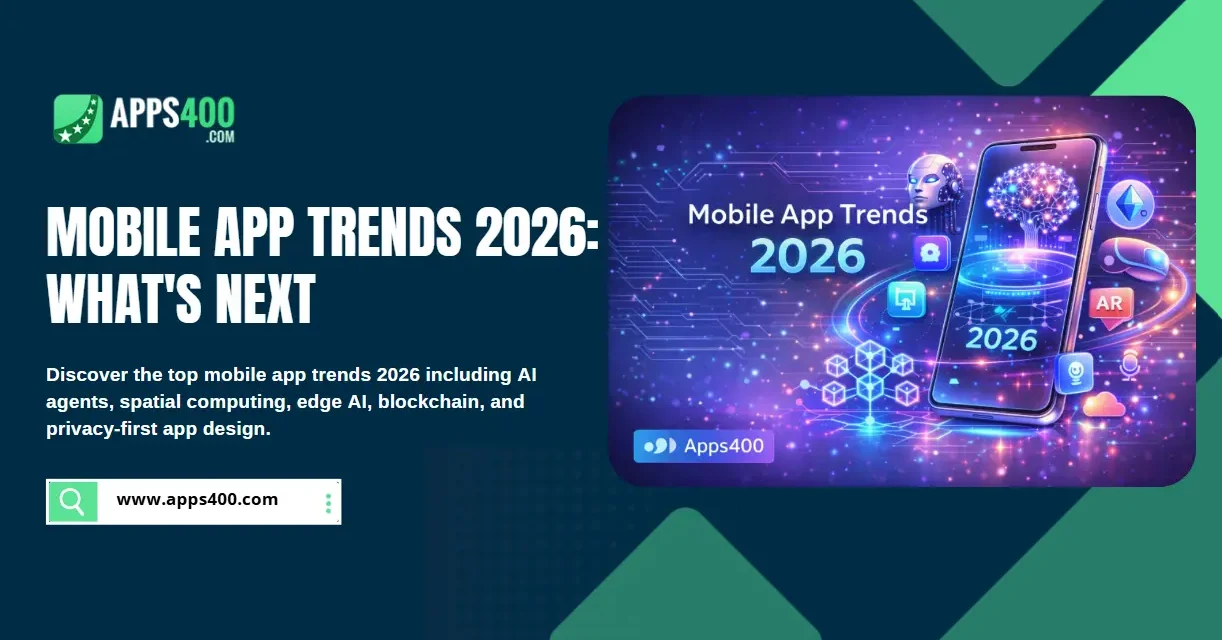
The mobile app landscape has undergone seismic shifts entering 2026, with artificial intelligence evolution, spatial computing maturation, and decentralized technologies fundamentally changing how developers build and users experience applications. Understanding mobile app trends 2026 is crucial for developers, businesses, and stakeholders seeking to remain competitive in an industry where yesterday’s innovations become today’s expectations.
This year marks a pivotal transition from experimental features to mainstream implementations. Technologies that seemed futuristic mere months ago now power everyday applications used by millions. As we progress through 2026, these mobile app trends 2026 will separate forward-thinking apps from those struggling with obsolete approaches.
AI Agents: From Assistants to Autonomous Operators
The most transformative of mobile app trends 2026 is the proliferation of AI agents capable of executing complex multi-step tasks autonomously. Unlike 2025’s chatbots that simply responded to queries, 2026’s AI agents understand context, make decisions, and complete objectives with minimal human intervention.
Anthropic’s Claude and OpenAI’s GPT-4.5 now power mobile experiences where users describe desired outcomes rather than specific steps. Travel apps book entire itineraries autonomously, finance apps rebalance portfolios based on market conditions, and productivity apps manage schedules by coordinating across multiple services without constant user input.
Developers integrating these capabilities through APIs find users expect intelligent automation as standard functionality. Apps lacking sophisticated AI feel dated compared to competitors offering proactive, context-aware experiences. For businesses exploring implementation, partnering with specialists in advanced mobile app development ensures proper AI agent integration from project inception.
“By January 2026, 67% of new mobile apps incorporate AI agent capabilities, up from just 23% in mid-2025, demonstrating the rapid adoption of autonomous AI as a core feature rather than experimental add-on.”
Spatial Computing Goes Mainstream
Apple’s Vision Pro ecosystem expansion and Meta’s improved Quest devices have made spatial computing a legitimate platform for mobile app trends 2026. Developers now build visionOS applications that blend digital content with physical environments, creating experiences impossible on traditional screens.
Retail apps enable virtual product placement in users’ homes with photorealistic accuracy, education apps create immersive 3D learning environments, and collaboration tools facilitate spatial meetings where participants interact naturally regardless of physical location. The release of visionOS 2.0 in early 2026 simplified development, accelerating adoption among mainstream developers.
While spatial computing apps represent a smaller install base than traditional mobile apps, early adopters gain competitive advantages as the platform matures. Companies successfully bridging their existing iOS applications into spatial experiences position themselves as innovation leaders.
Edge AI: Processing Power Moves to Devices
Among the most technically significant mobile app trends 2026 is the shift from cloud-based to on-device AI processing. Apple’s A18 and M4 chips, along with Qualcomm’s Snapdragon 8 Gen 4, deliver neural processing capabilities that previously required server infrastructure.
This enables instant AI responses without internet connectivity, perfect privacy since data never leaves devices, and elimination of API costs for AI features. Apps like Photomator perform complex image editing using entirely on-device models, while translation apps provide real-time conversation translation offline.
Developers leveraging Core ML 7 and Android ML Kit 2026 create AI-powered features impossible in previous years. Edge AI democratizes advanced capabilities previously limited to companies with massive cloud infrastructure budgets.
Super Apps Consolidate Services
The super app concept, dominant in Asia for years, finally gains traction in Western markets as a defining characteristic of mobile app trends 2026. Rather than separate apps for payments, messaging, shopping, and services, users increasingly prefer unified platforms handling multiple needs.
X (formerly Twitter) expanded into payments and shopping, PayPal now offers messaging and marketplace features, and traditional banks launch app ecosystems rivaling dedicated fintech solutions. This consolidation challenges single-purpose apps to justify existence when super apps provide “good enough” alternatives.
Developers must either create exceptionally specialized experiences that super apps cannot replicate or consider partnerships integrating their services into existing super app ecosystems rather than competing directly.
Decentralized App Ecosystems Emerge
Blockchain technology maturation brings legitimate use cases to mobile app trends 2026 beyond cryptocurrency speculation. Decentralized apps (dApps) using Ethereum, Solana, and other chains enable true data ownership, censorship-resistant applications, and transparent verification.
Social media dApps give users control over their data and content, gaming apps enable genuine asset ownership tradeable across platforms, and identity verification apps provide privacy-preserving authentication without central authorities. Rainbow Wallet and similar applications make blockchain interaction accessible to non-technical users.
While mainstream adoption remains limited, forward-thinking developers explore blockchain integration where genuine decentralization benefits users rather than implementing Web3 features for marketing purposes.
Privacy-First Architecture Becomes Mandatory
Regulatory pressure and user awareness make privacy fundamental to mobile app trends 2026. The EU’s Digital Services Act enforcement, expanded GDPR requirements, and California’s privacy laws force developers to implement privacy-by-design rather than treating it as an afterthought.
Apps now default to minimal data collection, implement end-to-end encryption for communications, and provide clear explanations for every permission request. Apple’s privacy nutrition labels and Google’s privacy dashboard make data practices transparent, punishing apps with invasive tracking through reduced visibility and poor ratings.
Developers building privacy-respecting apps gain competitive advantages as users increasingly choose applications protecting their information. Leveraging professional app store optimization strategies that highlight privacy features converts privacy-conscious users effectively.
“Apps transparently communicating privacy practices and implementing genuine data minimization see 34% higher retention rates in 2026 compared to those with opaque privacy policies, as user trust becomes a key differentiator.”
Voice and Conversational Interfaces Mature
Voice interaction evolution represents a subtle but impactful element of mobile app trends 2026. Natural language processing improvements enable genuinely conversational app control rather than rigid command structures requiring specific phrasing.
Apps like Perplexity demonstrate how conversational search surpasses traditional interfaces for complex queries. Productivity apps increasingly offer voice-first experiences where speaking proves faster than typing or tapping through menus.
Accessibility benefits extend beyond users with disabilities to anyone multitasking, driving, or preferring voice interaction. Developers implementing robust voice interfaces through SiriKit and Google Assistant integration create more inclusive, versatile applications.
Sustainability Features Drive User Choice
Environmental consciousness influences mobile app trends 2026 as users favor apps demonstrating sustainability commitments. Carbon tracking features, dark modes reducing energy consumption, and optimization minimizing data transfer appeal to environmentally aware users.
Apps transparently communicating their environmental impact and implementing efficiency measures differentiate themselves in crowded categories. Developers optimizing apps for minimal battery drain and data usage provide tangible sustainability benefits while improving user experience.
Hyper-Personalization Through Predictive AI
Apps in 2026 anticipate needs before users articulate them, representing sophisticated mobile app trends 2026 in user experience design. Predictive algorithms analyze behavior patterns, contextual data, and preferences to surface relevant content, features, and suggestions proactively.
News apps curate content based on reading patterns, fitness apps adjust workout recommendations using performance data, and shopping apps predict purchase timing for frequently bought items. This anticipatory design reduces cognitive load, making apps feel intuitive and helpful rather than reactive and passive.
Frequently Asked Questions About Mobile App Trends 2026
Should I rebuild my app to incorporate 2026 trends?
Not necessarily. Evaluate which mobile app trends 2026 align with your app’s purpose and user needs. AI agent integration and edge AI provide broad benefits across categories, while spatial computing remains niche. Focus on trends solving genuine user problems rather than implementing features for novelty.
How do I stay updated on emerging mobile app trends?
Follow official developer blogs from Apple and Google, monitor industry publications, and study successful Android applications implementing new capabilities. Attend developer conferences and engage with developer communities to learn from peers experimenting with emerging technologies.
Are these trends relevant for small apps and startups?
Absolutely. Many mobile app trends 2026 like edge AI and privacy-first design benefit apps of any size. Start with one or two relevant trends rather than attempting comprehensive implementation. Small teams can leverage pre-built solutions and frameworks rather than building everything from scratch.
Preparing for the Future
Successfully navigating mobile app trends 2026 requires balancing innovation with stability. Not every trend suits every app, but understanding the landscape enables strategic decisions about which capabilities warrant investment.
Focus on trends directly benefiting your users rather than chasing hype. AI agents make sense for productivity and service apps, spatial computing suits visualization and retail, while privacy features benefit everyone. For comprehensive strategy development, exploring innovative mobile applications reveals how industry leaders implement these trends effectively.
The apps thriving in 2026 and beyond balance cutting-edge capabilities with fundamental quality—intuitive interfaces, reliable performance, and genuine user value. Trends provide tools for creating better experiences, but exceptional execution of basics remains the foundation of success in mobile app development.