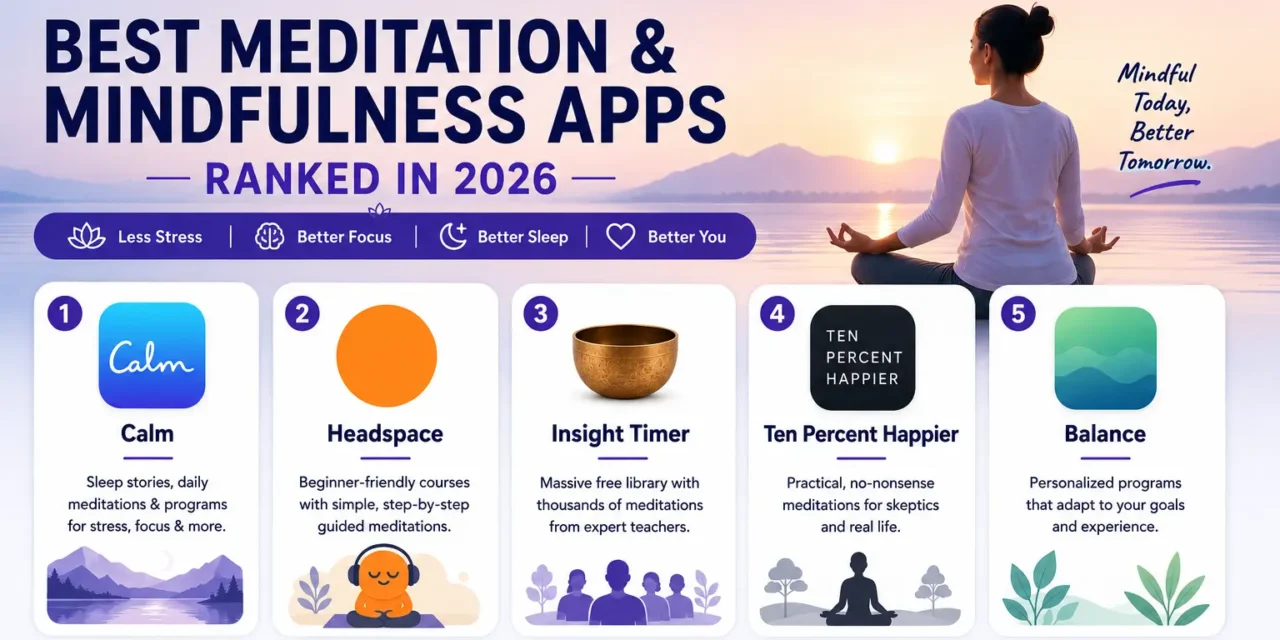
Meditation apps have moved well past simple timer-and-gong tools, evolving into full libraries of guided sessions, sleep stories, and structured courses designed to build a genuine daily habit rather than a one-off relaxation session. The real test of any meditation app isn’t how good it feels the first week, it’s whether the content stays varied and engaging enough that you actually keep opening it months later once the initial novelty wears off. Pricing and content depth vary considerably across the category too, and paying for a subscription you rarely open defeats the purpose just as much as never starting at all. Here are five meditation and mindfulness apps in 2026 ranked on content depth, ease of building a consistent habit, and genuine value for the subscription price.
Calm
Calm remains one of the most polished options in the category, with genuinely excellent sleep stories narrated by well-known voices alongside structured meditation programs for anxiety, focus, and stress. Its Daily Calm session gives users a simple, consistent starting ritual that’s easy to build into a morning or evening routine.

Headspace
Headspace leans into approachable, friendly teaching with animated explainers that make meditation concepts genuinely easy to understand for total beginners. Its structured courses build progressively rather than dropping users into random sessions, which helps establish real technique rather than just passive relaxation.
Insight Timer
Insight Timer offers a genuinely massive free library contributed by thousands of independent teachers, making it the best value option for anyone not ready to commit to a paid subscription. The sheer variety means it can feel less curated than Calm or Headspace, but the depth of free content is hard to match.
Ten Percent Happier
Ten Percent Happier targets a specific audience, skeptics who want the genuine benefits of meditation without the spiritual framing some competitors lean into, with teaching that stays grounded and practical throughout its course content.
Balance
Balance personalizes its meditation program based on your specific goals and experience level, adjusting content over time as you progress rather than offering the same static library to every user regardless of where they’re starting from.
What Actually Makes a Meditation Habit Stick
The single biggest factor separating people who maintain a meditation practice from those who quit within a few weeks isn’t the app’s content library, it’s session length and consistency of timing. Starting with five minutes at a fixed time each day, right after waking up or right before bed, tends to build a far more durable habit than sporadic twenty-minute sessions squeezed in whenever there’s spare time. Most of the apps above let you set a fixed daily reminder, and actually using that feature, rather than relying purely on willpower to remember, makes a genuinely measurable difference in whether the habit survives past the first month. Pairing the reminder with an existing daily habit, like right after brushing your teeth, tends to anchor the new routine even more firmly than a standalone notification alone.
There’s no single best meditation app for everyone, the right pick depends on whether you want structured courses, a huge free library, or content tailored to a specific skeptical mindset. Insight Timer is the easiest low-risk starting point given its free depth, while Calm and Headspace justify their subscription cost once you know meditation is a habit you genuinely want to keep building long-term. Whichever you choose, give it at least two full weeks before judging whether the app itself, rather than meditation in general, is the right fit for you.