Understanding Mobile App Development Fundamentals
Mobile app development refers to the process of creating software applications that run on mobile devices. Unlike traditional software development, mobile app development requires consideration of unique factors such as smaller screen sizes, touch interfaces, limited processing power, and varying network conditions.
The journey begins with choosing the right development approach for your project. You have three primary options: native development (building separately for iOS and Android), cross-platform development (using frameworks like Flutter or React Native), or progressive web apps (PWAs) that work across all platforms through browsers.
Native development offers the best performance and access to device-specific features, though it requires separate codebases for each platform. If you’re considering iOS app development, you’ll work with Swift or Objective-C, while Android developers typically use Kotlin or Java. This approach delivers the smoothest user experience but comes with higher development costs and longer timelines.
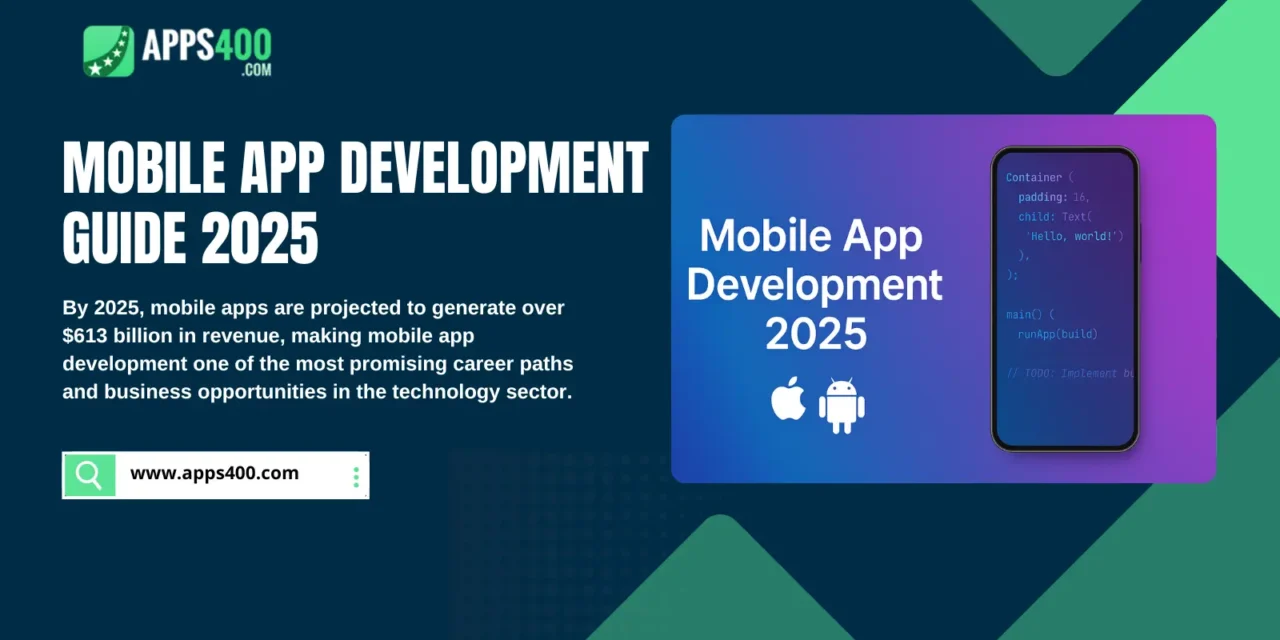
“By 2025, mobile apps are projected to generate over $613 billion in revenue, making mobile app development one of the most promising career paths and business opportunities in the technology sector.”
Choosing Your Mobile App Development Platform
Selecting the right platform significantly impacts your app’s success, development timeline, and budget. iOS and Android dominate the market, but they cater to different demographics and require distinct development approaches.
iOS users typically spend more on apps and in-app purchases, making it an attractive platform for monetization. The mobile app development process for iOS is often considered more straightforward due to Apple’s controlled ecosystem and standardized devices. However, you’ll need a Mac computer and must adhere to Apple’s strict App Store guidelines.
Android, commanding over 70% of the global smartphone market, offers broader reach and more flexibility in development. For businesses targeting emerging markets or seeking maximum user acquisition, Android app development proves invaluable. The platform’s open-source nature allows for greater customization, though testing across numerous device types can be challenging.
Cross-Platform Development Solutions
Cross-platform frameworks have revolutionized mobile app development by enabling developers to write code once and deploy it across multiple platforms. Popular solutions like Flutter, React Native, and Xamarin reduce development time by up to 50% while maintaining near-native performance.
These frameworks are particularly suitable for startups and businesses with limited budgets who need to launch quickly on both platforms. You’ll sacrifice some platform-specific optimization, but for most applications, the trade-off between cost savings and minor performance differences makes cross-platform development an intelligent choice.
The Mobile App Development Process: Step-by-Step
Successful mobile app development follows a structured process that ensures your app meets user needs while staying within budget and timeline constraints. Each phase builds upon the previous one, creating a solid foundation for your application.
1. Discovery and Planning Phase
Begin by clearly defining your app’s purpose, target audience, and core features. Conduct market research to understand your competition and identify gaps you can fill. Create user personas to guide your design decisions and ensure you’re building for real people with specific needs.
During this phase, you’ll also determine your monetization strategy—whether through paid downloads, in-app purchases, subscriptions, or advertising. For insights on maximizing your app’s visibility after launch, explore proven app marketing strategies that drive downloads.
2. Design and Prototyping
User experience (UX) and user interface (UI) design make or break mobile applications. Your design should prioritize intuitive navigation, fast loading times, and visually appealing layouts that align with platform-specific design guidelines (Material Design for Android, Human Interface Guidelines for iOS).
Create wireframes and interactive prototypes to visualize your app’s flow before writing a single line of code. This step helps identify usability issues early when they’re inexpensive to fix. Tools like Figma, Sketch, and Adobe XD streamline the design process and facilitate collaboration between designers and developers.
3. Development and Testing
The actual coding phase of mobile app development involves implementing your design, integrating backend services, and building the features that make your app unique. Choose a development methodology—Agile is most common for mobile projects—that allows for iterative improvements based on testing feedback.
Quality assurance cannot be overlooked. Test your app thoroughly across different devices, screen sizes, and operating system versions. Perform functional testing, usability testing, performance testing, and security testing to ensure a flawless user experience. Beta testing with real users provides invaluable insights before your official launch.
If you’re looking for professional development services, partnering with experienced teams for custom mobile app development solutions can accelerate your project while ensuring technical excellence and best practices implementation.
Mobile App Development Costs: What to Expect
Understanding the financial investment required for mobile app development helps you budget appropriately and set realistic expectations. Costs vary dramatically based on complexity, features, design requirements, and your chosen development approach.
Simple apps with basic functionality typically cost between $10,000 and $50,000. These include apps with standard features like user authentication, simple databases, and basic UI elements. Medium-complexity apps incorporating custom UI, API integrations, and advanced features range from $50,000 to $150,000.
Complex applications with cutting-edge features like AI integration, real-time synchronization, advanced security, or augmented reality can exceed $200,000. Enterprise-level applications with extensive functionality and scalability requirements often cost significantly more.
“The average time to develop a mobile app ranges from 3-9 months, with 38% of development costs typically allocated to backend development and API integration, 28% to frontend development, and the remainder split between design, testing, and project management.”
Essential Tools and Technologies for Mobile App Development
Modern mobile app development relies on a robust ecosystem of tools, frameworks, and services that streamline the creation process. Selecting the right technology stack directly impacts your app’s performance, scalability, and maintainability.
For native iOS development, Xcode remains the official integrated development environment (IDE), while Android Studio serves Android developers. Both provide comprehensive debugging tools, simulators, and interface builders. Cross-platform developers often choose Visual Studio Code for its flexibility and extensive plugin ecosystem.
Backend-as-a-Service (BaaS) platforms like Firebase, AWS Amplify, and Back4App accelerate development by providing ready-made backend infrastructure. These services handle authentication, databases, push notifications, and analytics, allowing you to focus on creating exceptional user experiences rather than managing servers.
Version Control and Collaboration
Git and platforms like GitHub or GitLab are non-negotiable for professional mobile app development. Version control systems track changes, enable collaboration among team members, and provide safety nets for experimenting with new features without risking your stable codebase.
App Store Optimization: Ensuring Your App Gets Discovered
Building a remarkable app is only half the battle—you need users to find and download it. App Store Optimization (ASO) employs techniques similar to SEO but tailored specifically for app stores. Proper optimization can dramatically increase your organic downloads without paid advertising.
Your app’s title, description, keywords, and visual assets (icon, screenshots, preview videos) all influence search rankings and conversion rates. Research relevant keywords that your target users search for, then strategically incorporate them into your metadata. Working with specialists who offer professional ASO services can significantly enhance your app’s visibility and drive sustainable organic growth in both the Apple App Store and Google Play Store.
Common Mobile App Development Challenges and Solutions
Every mobile app development project encounters obstacles. Anticipating common challenges allows you to implement preventive measures and respond effectively when issues arise.
Platform fragmentation, particularly in the Android ecosystem, presents testing challenges with thousands of device models running various OS versions. Address this through comprehensive automated testing frameworks and prioritizing the most popular devices among your target audience.
Security vulnerabilities can devastate your app’s reputation and expose users to data breaches. Implement encryption for sensitive data, use secure authentication methods, validate all user inputs, and regularly update dependencies to patch known vulnerabilities. Consider engaging security professionals for penetration testing before launch.
Performance optimization requires ongoing attention throughout development. Monitor memory usage, minimize network requests, implement efficient caching strategies, and optimize images and assets. Users abandon apps that feel slow or drain battery life, so performance must be a priority from day one.
Frequently Asked Questions About Mobile App Development
How long does mobile app development typically take?
The timeline for mobile app development varies based on complexity. Simple apps can be completed in 2-3 months, while medium-complexity apps typically require 4-6 months. Complex applications with advanced features may take 9-12 months or longer. Factors influencing timeline include feature scope, platform choice, team size, and whether you’re building native or cross-platform apps.
Should I develop for iOS or Android first?
The platform choice depends on your target audience and business goals. If your users are primarily in North America, Europe, or Australia and you prioritize revenue, start with iOS. For broader global reach, especially in emerging markets, begin with Android. Many businesses now opt for cross-platform development to launch on both simultaneously, though this may involve some compromises.
Can I build a mobile app without coding experience?
While traditional mobile app development requires programming knowledge, no-code and low-code platforms like Adalo, Bubble, and FlutterFlow enable non-technical individuals to create functional apps. These platforms work well for simple applications but have limitations regarding customization and scalability. For complex features or superior performance, hiring experienced developers remains the best approach.
What’s the difference between native and cross-platform development?
Native development creates separate apps for iOS and Android using platform-specific languages (Swift for iOS, Kotlin for Android), delivering optimal performance and full access to device features. Cross-platform development uses frameworks like Flutter or React Native to write code once and deploy across multiple platforms, reducing costs and development time but sometimes sacrificing performance or platform-specific capabilities.
How much does it cost to maintain a mobile app after launch?
Annual maintenance typically costs 15-20% of the initial development cost. This includes bug fixes, OS updates compatibility, security patches, server costs, and minor feature additions. Apps requiring regular content updates, extensive backend infrastructure, or frequent feature releases may incur higher maintenance expenses. Budget for ongoing costs to ensure your app remains functional and competitive.
The Future of Mobile App Development
The mobile app development landscape continues evolving at a remarkable pace. Emerging technologies like artificial intelligence, augmented reality, and 5G connectivity are expanding what’s possible in mobile applications. Machine learning integration enables personalized user experiences, while AR creates immersive interactions previously confined to science fiction.
Low-code and no-code platforms are democratizing app creation, allowing businesses to prototype and launch apps more quickly. However, this doesn’t diminish the value of skilled developers—rather, it shifts focus toward solving complex problems and creating truly innovative experiences that automated tools cannot replicate.
Sustainability and ethical design are becoming central considerations in mobile app development. Users increasingly favor apps that respect their privacy, minimize data collection, and provide transparent value. Developers who prioritize these principles while delivering exceptional functionality will stand out in saturated markets.
Taking Your First Steps in Mobile App Development
Beginning your mobile app development journey might seem daunting, but breaking it into manageable steps makes the process achievable. Start by learning programming fundamentals if you’re new to development—online courses, bootcamps, and tutorials provide accessible entry points.
Work on small projects to build practical experience before tackling complex applications. Contributing to open-source projects exposes you to professional codebases and development practices while building your portfolio. Join developer communities, attend meetups, and engage with other developers to accelerate your learning and stay current with industry trends.
Whether you’re developing apps professionally or pursuing it as a passion project, the skills you acquire in mobile app development remain highly valuable and transferable. The combination of technical expertise, creative problem-solving, and user-centric thinking positions you for success in the dynamic world of mobile technology.
Ready to turn your app idea into reality? The resources, tools, and community support available today make it an excellent time to enter mobile app development. Start with clear goals, commit to continuous learning, and don’t be afraid to iterate based on user feedback. Your successful app journey begins with that crucial first step.