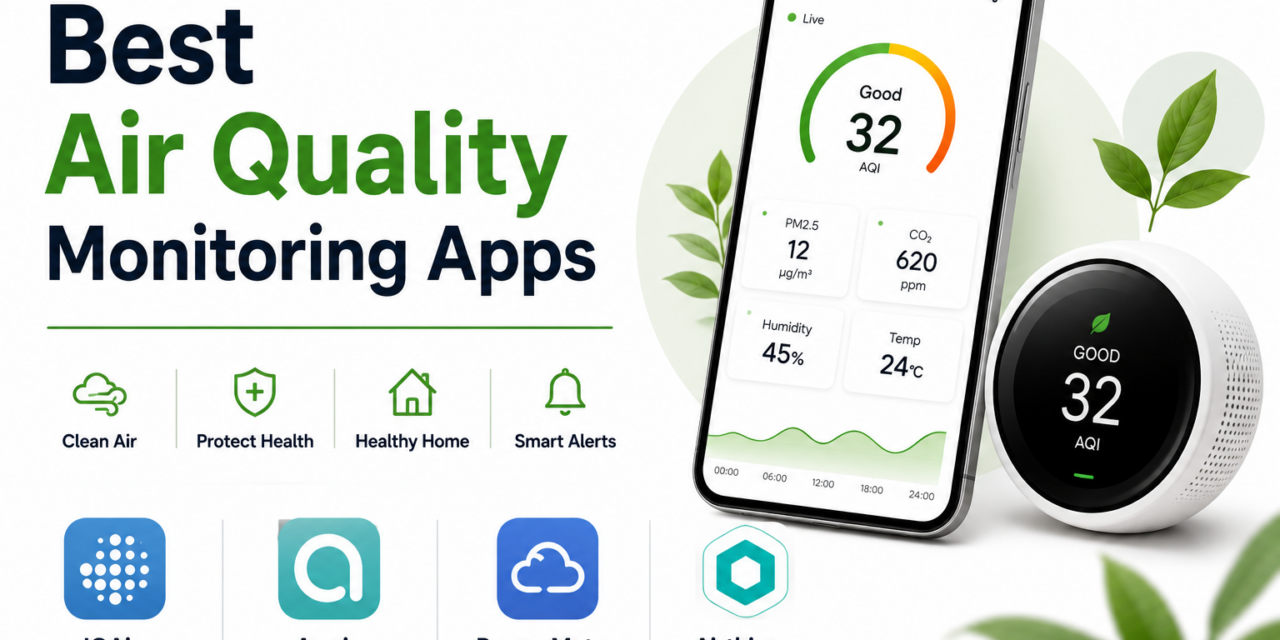
Indoor air quality has quietly become one of the most talked-about wellness topics of 2026, and it is not hard to see why. Wildfire smoke drifting across entire regions, unpredictable pollen seasons, and homes that are sealed tighter than ever for energy efficiency have all combined to trap pollutants indoors longer than most people realize. A growing lineup of air quality and home health monitoring apps has stepped in to translate raw sensor data into something a normal household can actually act on. These apps connect to standalone monitors, smart thermostats, and even some air purifiers to give a real-time picture of particulate matter, volatile organic compounds, carbon dioxide, humidity, and mold risk. For anyone dealing with allergies, asthma, or simply wanting a healthier place to sleep and work, this category of app has moved from niche gadget accessory to a genuinely useful part of daily life. Below is a look at the apps making the biggest difference this year, along with what sets each one apart.
IQAir AirVisual

IQAir AirVisual remains one of the most trusted names in air quality tracking, and its 2026 update leans harder into hyperlocal forecasting. The app pulls from a global network of outdoor sensors while also syncing with IQAir’s indoor monitors to compare inside versus outside air in real time. A standout feature this year is the wildfire smoke alert system, which now predicts smoke arrival hours in advance based on wind modeling, giving households time to close windows and switch on purifiers before air quality actually drops. The app also generates a simple daily health recommendation, telling sensitive users whether it’s safe to open windows, exercise outdoors, or air out a freshly cleaned room.
View on Play Store | Visit Website
Awair Home

Awair Home pairs with the company’s indoor sensor pucks to monitor five key factors: chemicals and VOCs, temperature, humidity, particulate matter, and CO2. What makes Awair stand out in 2026 is its Awair Score, a single number from 0 to 100 that summarizes overall room health at a glance, which is especially useful for parents checking a nursery or anyone managing a home office. The app has added room-by-room comparison charts this year, so users can quickly see that the basement carries more humidity risk than the living room, or that a bedroom’s CO2 climbs overnight from poor ventilation. Awair also ties directly into smart thermostat and fan automations, so a bad air reading can trigger a fan to switch on automatically without any manual input.
View on Play Store | Visit Website
BreezoMeter Air Quality
BreezoMeter Air Quality focuses heavily on hyperlocal outdoor conditions and pollen forecasting, making it a favorite among allergy sufferers who need to plan their day around pollution and pollen spikes. The 2026 version introduces a personalized health profile where users can log conditions like asthma or seasonal allergies, and the app tailors its alerts and recommended precautions accordingly. Its pollen breakdown goes beyond a single number, splitting readings into tree, grass, and weed pollen so users understand exactly what is triggering their symptoms on a given day. A new commute mode also shows air quality along a chosen route, which has become popular with parents walking kids to school in cities with heavier traffic pollution.
View on Play Store | Visit Website
Airthings View Plus Companion

Airthings has built a strong reputation around radon detection, and its companion app remains the go-to choice for homeowners specifically worried about that invisible gas alongside general air quality. The 2026 app update adds long-term radon trend graphs that satisfy real estate disclosure requirements in several regions, making it genuinely useful during a home sale or purchase. Beyond radon, the app tracks CO2, humidity, pressure, and particulate matter, presenting everything in a dashboard that separates short-term spikes from long-term baseline trends. A newly added maintenance reminder feature nudges users to replace sensor batteries or recalibrate devices, something earlier versions left entirely to memory.
View on Play Store | Visit Website
Choosing between these apps usually comes down to what a household is most worried about. Families near wildfire-prone regions tend to prefer IQAir for its smoke forecasting, allergy sufferers gravitate toward BreezoMeter for its detailed pollen data, and anyone concerned about radon or long-term home health leans toward Airthings. Awair sits nicely in the middle as an all-around indoor monitor with strong automation support. Most of these apps work with either their own branded hardware or a small set of supported third-party sensors, so it is worth checking compatibility before buying a monitor. A growing number of users are running two apps side by side, using one for outdoor forecasting and another purely for indoor room-by-room tracking, since no single app has yet nailed both halves of the picture perfectly.
Conclusion
Home air quality monitoring has finally reached a point where the data is genuinely actionable rather than just interesting to look at. Whether the priority is dodging a wildfire smoke event, taming allergy season, or simply keeping a bedroom’s CO2 low enough for better sleep, there is now an app suited to that exact concern. As more smart home devices add native air sensors in 2026, expect these apps to keep expanding what they can automate, turning a bad air quality reading into an instant, hands-free response rather than a notification that gets ignored.