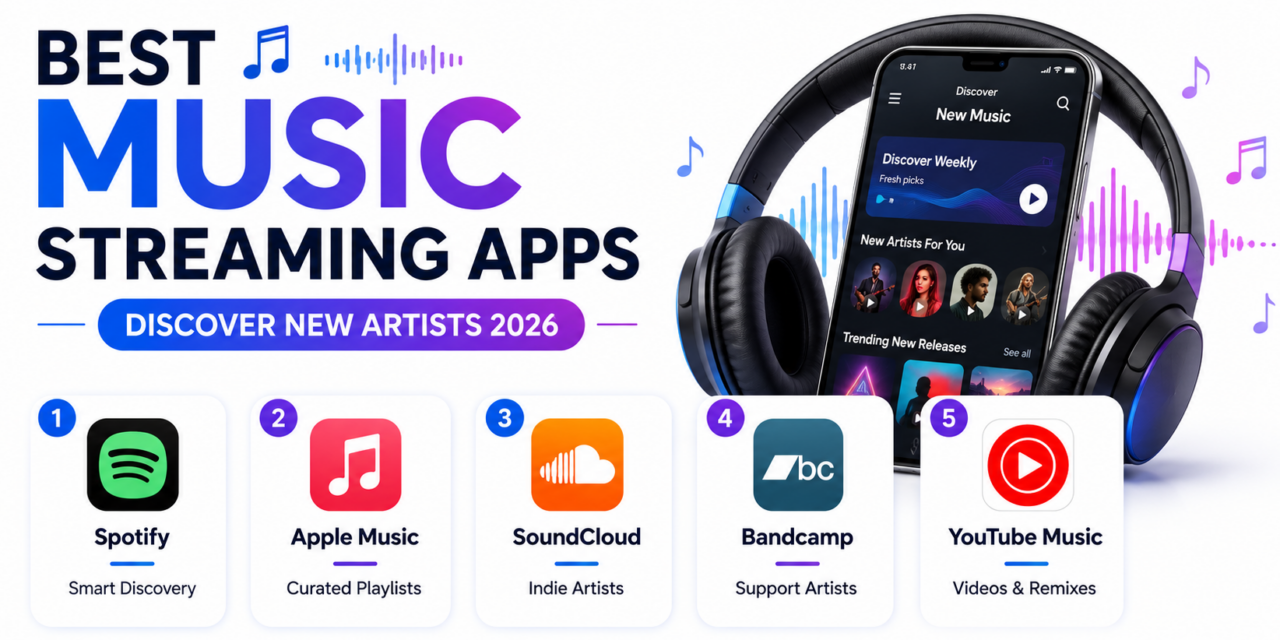
Streaming gave listeners access to nearly every song ever recorded, but that access alone doesn’t solve the genuinely different problem of actually finding new artists worth listening to, since a lot of streaming default experiences quietly settle into recommending the same familiar names on repeat rather than pushing genuine discovery. The best music apps in 2026 have gotten meaningfully better at surfacing genuinely unfamiliar artists based on nuanced listening patterns rather than just popularity, and several have built entire discovery-focused features specifically designed to break a listener out of their existing habits. Here are five music streaming apps worth using this year for anyone tired of the same recycled playlist. Most also let you follow other listeners’ public playlists directly, offering a genuinely human alternative discovery path alongside whatever the algorithm suggests.
Spotify
Spotify’s Discover Weekly and Release Radar playlists remain genuinely effective at surfacing new artists based on nuanced listening history, and its algorithm has continued improving at distinguishing between genuinely similar taste versus simple genre matching.
🔗 Download on Play Store | www.spotify.com
Apple Music
Apple Music pairs algorithmic recommendations with genuinely curated human-selected playlists from real music editors, appealing to listeners who want a blend of both data-driven and expert-curated discovery rather than relying on algorithms alone.
🔗 Download on Play Store | music.apple.com
SoundCloud
SoundCloud remains the strongest platform specifically for discovering genuinely unsigned and emerging artists who haven’t yet reached major streaming platforms, appealing to listeners who want to find something before it becomes widely popular.
🔗 Download on Play Store | soundcloud.com
Bandcamp

Bandcamp focuses on directly supporting independent artists financially, letting listeners purchase music directly with a genuinely larger share of revenue going to the artist than typical streaming royalty splits provide.
🔗 Download on Play Store | bandcamp.com
YouTube Music
YouTube Music leverages the platform’s enormous catalog of live performances, covers, and remixes alongside standard studio tracks, offering genuinely different discovery paths than audio-only platforms through video-based recommendations.
The right app often depends on how deep into truly unknown territory a listener actually wants to go. Spotify and Apple Music suit listeners wanting genuinely effective algorithmic discovery within an already comprehensive, mainstream catalog. SoundCloud and Bandcamp suit listeners specifically wanting to find artists before they reach the mainstream, with Bandcamp additionally appealing to anyone who wants their listening habits to directly and meaningfully support independent artists financially. YouTube Music’s video-inclusive catalog suits listeners who enjoy discovering artists through live performances or alternate versions that don’t always make it onto standard audio-only platforms. It’s worth actively engaging with a chosen app’s discovery features, saving or skipping tracks deliberately, rather than passively listening, since most recommendation algorithms improve considerably faster with genuine active feedback. It’s also worth occasionally seeking out a genre you’d normally skip entirely, since some of the most memorable discoveries come from stepping outside an established comfort zone rather than refining within it.
Discovering new music takes a bit more intentional effort than simply pressing play on a familiar playlist, but the right app genuinely rewards that effort with artists a passive listening habit would likely never surface. Pick based on how far into unfamiliar territory you actually want to venture, and let genuine curiosity, not just algorithmic convenience, guide at least some of your next listening session. The artist you almost skipped past is sometimes exactly the one worth giving a real chance, and that’s a discovery no algorithm alone ever fully replaces, no matter how sophisticated recommendation engines eventually become.