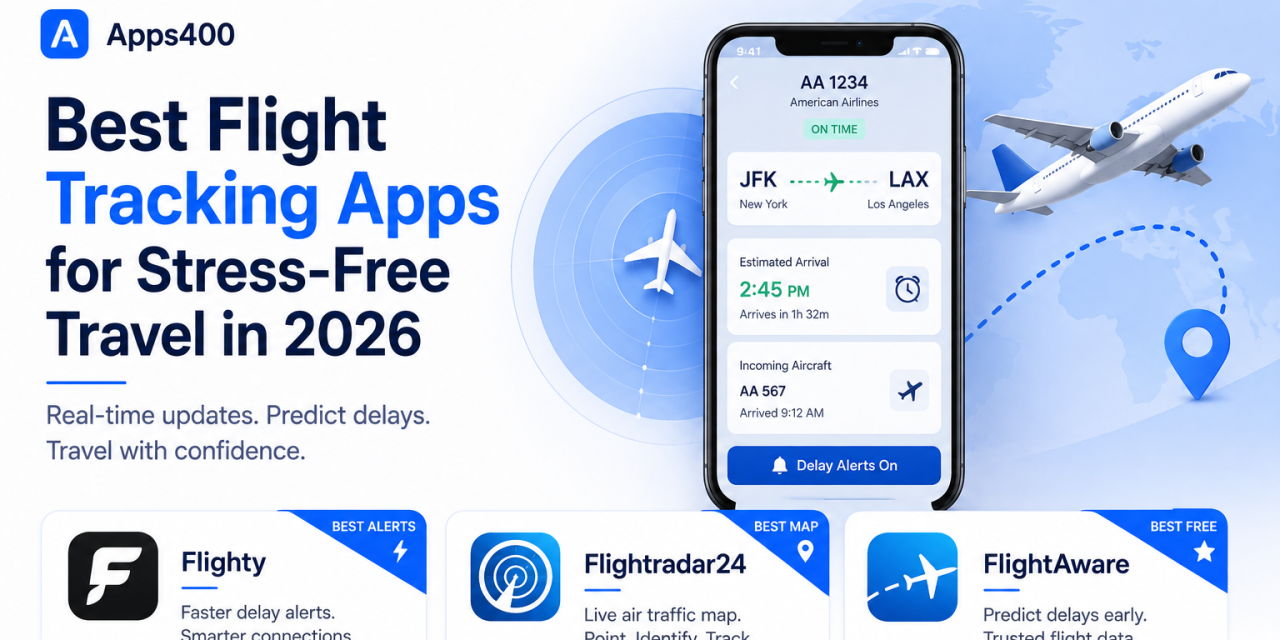
A good flight tracker has one real job: tell a traveler where a plane actually is and when it will land, ideally before the airline’s own app catches up. That promise matters most in the moments that count, a tight connection, a relative’s inbound flight, or a delay that hasn’t been officially announced yet, and 2026’s strongest flight tracking apps have gotten genuinely good at exactly that kind of predictive alerting. One important note before diving in: App in the Air, a once-popular travel tracker, was formally removed from app stores in September 2024 and shouldn’t appear on anyone’s shortlist anymore. Here’s a look at what’s actually worth using this year.
Flighty
Flighty has built a devoted following among frequent flyers, pilots, and cabin crew for alerts that consistently arrive faster than the airline’s own notifications, with Reddit users in aviation communities reporting Flighty’s delay alerts beating United’s by five to ten minutes in real-world comparisons. Its predictive delay forecasting works by tracking the specific inbound aircraft that will become a traveler’s flight, flagging a likely delay before the airline confirms anything, and its Connection Assistant lays out every checkpoint required to make a tight layover along with how long each step typically takes. The app remains iOS-only with no Android version currently available, and its import tool can pull in historical flight data from several now-discontinued or competing trackers for anyone switching over.
Flightradar24

Flightradar24 remains one of the original and most trusted names in plane tracking, built around an enormous, highly detailed live map showing real aircraft positions worldwide using ADS-B data, and its standout feature lets users simply point a phone at the sky to identify exactly which aircraft is flying overhead. While it covers standard flight status basics like departure times, delays, and gate information, its real strength lies in raw aircraft-level detail, historical flight playback, and 3D views rather than the kind of proactive disruption alerts that define Flighty. Available free with a Gold subscription unlocking the full experience, it works well as a companion to a more prediction-focused tracker for travelers who also enjoy the aviation-enthusiast side of flight tracking.
View on Play Store | View on App Store
FlightAware

FlightAware has long served as the go-to data source underpinning flight tracking more broadly, and its mobile app carries that same data-rich, predictive-intelligence approach directly to travelers for free. Its Misery Map and inbound-aircraft tracking help travelers judge whether a tight connection is actually worth the risk, sometimes flagging a likely delay before an airline confirms it officially, though it stops short of helping file a compensation claim the way some competitors do. Available on both iOS and Android at no cost, with premium plans adding extended alert history and additional weather data layers, it remains an excellent all-around choice for travelers who want solid predictive data without paying for a subscription-only tracker.
View on Play Store | View on App Store
Choosing between these three really comes down to platform and how much a traveler is willing to pay for a slightly faster alert. Flighty remains the clear pick for iPhone users who want the fastest, most polished predictive alerts and are willing to pay for that edge, while FlightAware offers similarly strong predictive intelligence for free across both iOS and Android. Flightradar24 works best as a secondary app for anyone who also enjoys watching the broader picture of air traffic rather than tracking a single trip, and many serious travelers end up running two of these together, one for proactive alerts and one for the detailed aircraft-level map.
Conclusion
Flight tracking apps have gotten meaningfully better at beating an airline’s own notification system to the punch, which can be the difference between calmly rebooking a canceled connection and scrambling at the gate after everyone else already knows. Whichever of these three ends up being the right fit, the underlying goal remains the same: knowing what’s actually happening with a flight before the airline gets around to announcing it.