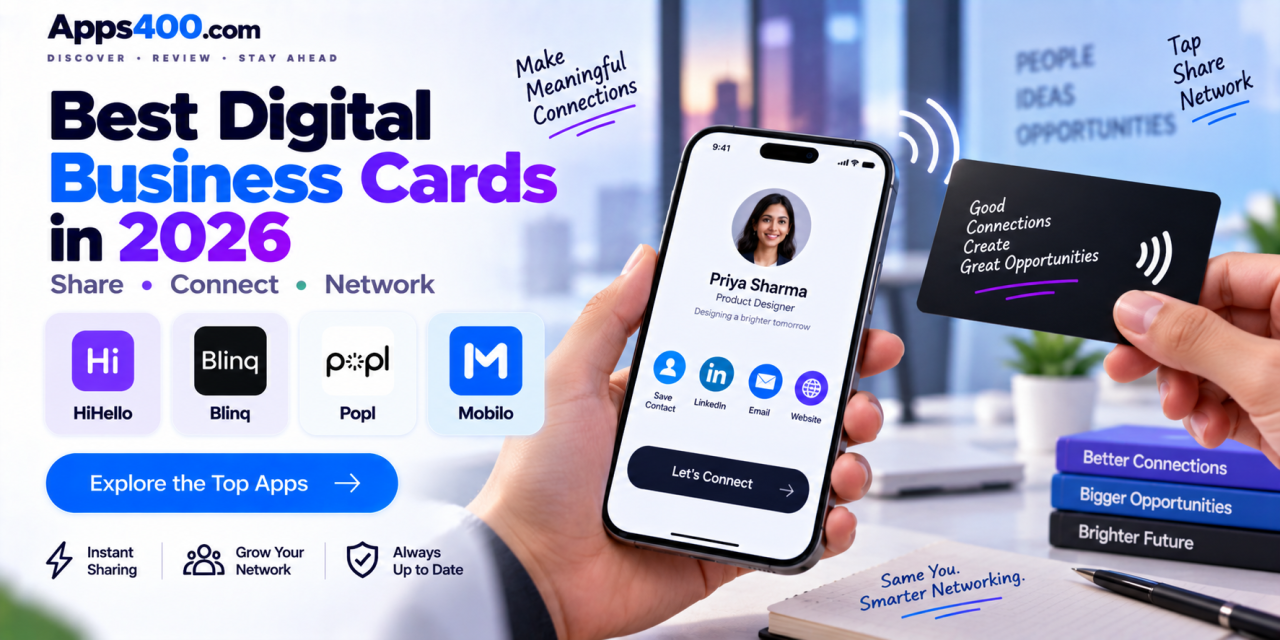
Paper business cards are quietly becoming a relic, with roughly 37 percent of small businesses and 23 percent of individuals already using a digital alternative that updates instantly without ever needing a reprint. The category has matured into genuinely distinct specializations worth understanding before picking one: NFC-first tools built around a physical tap-to-share card, branding-focused platforms for teams that want deep customization, and lead-capture specialists built specifically for event and sales environments. Here’s a look at what’s worth using this year.
HiHello
HiHello remains one of the most established, polished platforms in the category, offering a genuinely solid free tier for individuals alongside clean card designs, QR code sharing, and basic lead capture features that make it especially well suited for freelancers and consultants who want a quick, attractive digital card without a steep learning curve. Its networking features extend into deeper analytics on paid plans, tracking card views and interactions alongside team-level performance data for organizations managing multiple cards. CRM integrations with platforms like Salesforce, HubSpot, and Microsoft Dynamics on higher tiers make it a genuinely practical fit for teams that need contact data flowing directly into their existing sales pipeline.
Blinq
Blinq has built its reputation on doing one thing exceptionally well, creating a simple, shareable digital profile fast, with a streamlined onboarding flow that gets a new user set up considerably quicker than more feature-dense competitors. It has earned a higher rating than HiHello on both G2 and the App Store from thousands more professional reviews, and it remains one of the few platforms in this category offering a genuinely enterprise-grade security posture, making it the strongest choice for larger organizations in regulated industries like healthcare, education, and financial services that need centralized compliance controls. Its free 7-day or 30-day trials of paid plans give buyers a real chance to evaluate the platform before committing.
Popl
Popl popularized the NFC-first approach to digital business cards, pairing a physical NFC device, available as a card, wristband, or phone sticker, with a digital profile page that opens instantly on tap without requiring the recipient to install anything. It dominates specifically in event networking and lead capture, making it an industry favorite among sales and marketing teams working conference circuits where fast, tap-to-share exchanges genuinely outperform scanning a QR code in a crowded room. Its per-seat pricing for teams can add up for larger organizations, but for individual professionals and event attendees who prioritize speed and physical tap convenience, it remains the clearest NFC-first pick in the category.
Mobilo
Mobilo positions itself explicitly as a lead generation tool first, with the digital business card functioning primarily as the delivery mechanism for a broader sales-focused workflow rather than an end in itself. Its combination of NFC hardware and genuine lead-tracking dashboards has made it the clear choice specifically for sales-driven teams that prioritize converting a networking exchange into a tracked pipeline entry over pure branding or design polish. For sales organizations that want CRM connections and admin controls built around an entire team’s networking activity rather than individual card design, it remains one of the strongest specialized options available.
largely comes down to whether the priority is individual simplicity, team branding, event lead capture, or sales pipeline integration. Freelancers and solo professionals who want a quick, polished card without much setup should default to HiHello or Blinq, both offering genuinely strong free tiers. Anyone attending conferences or working an event circuit regularly should prioritize Popl’s NFC-first speed, and sales teams that specifically want networking to feed directly into a tracked lead pipeline will get the most direct value from Mobilo’s lead-generation-first design.
Conclusion
Digital business cards have moved decisively from a novelty into genuinely standard professional infrastructure, and 2026’s strongest platforms each serve a distinct networking style rather than competing for the exact same use case. Whichever of these four ends up fitting a specific networking need, the underlying advantage remains consistent: contact information that stays current without ever needing a reprint, shared instantly however a recipient prefers to receive it.